
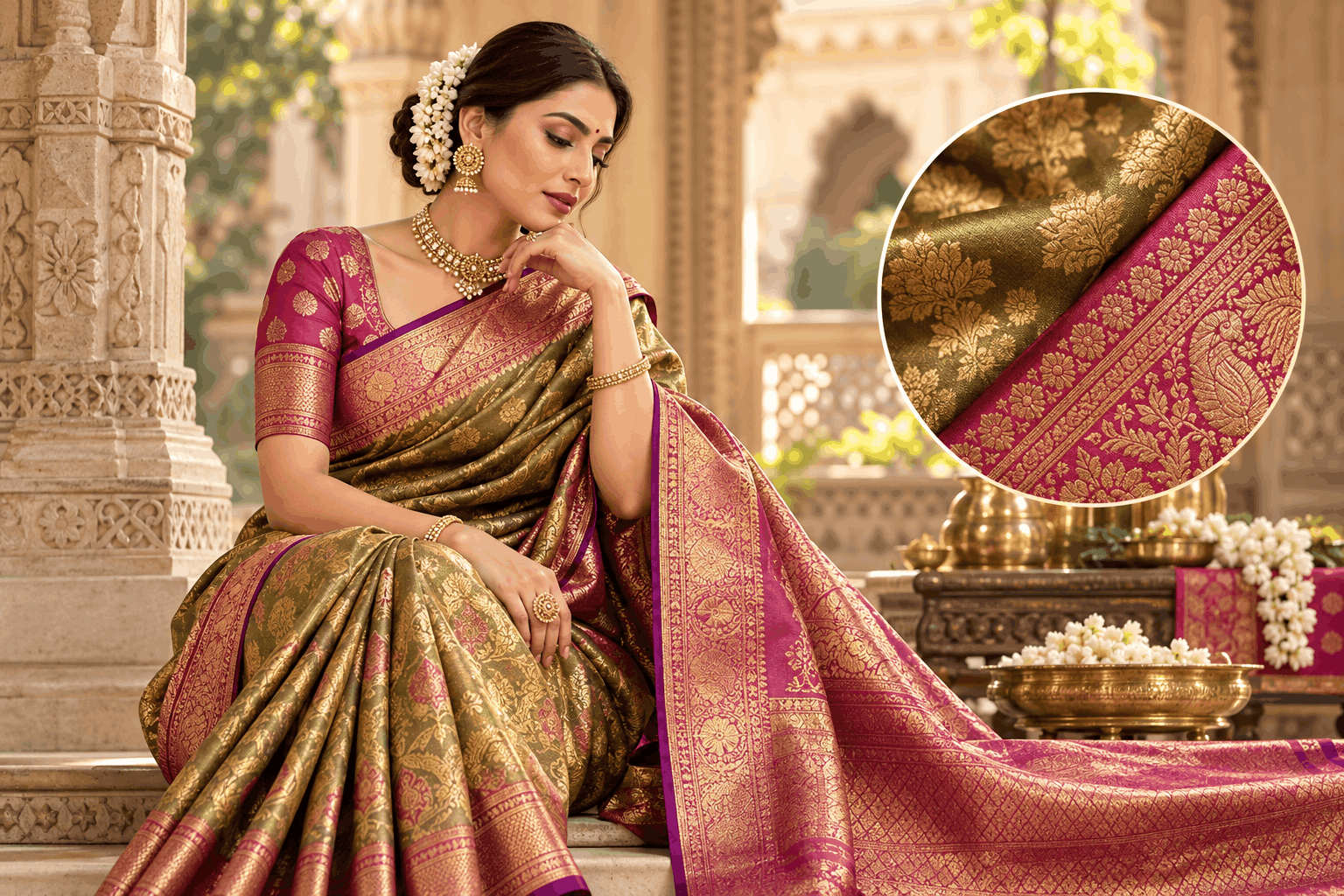
A Kanjivaram saree is often the most expensive saree a family buys. It’s worn at weddings, handed down to daughters, and kept for decades. It’s also one of the most copied sarees in India. Power-loom imitations, blended silks and “tested zari” pieces are sold as “pure Kanjivaram” every day.
This guide shows you how to identify a pure Kanjivaram silk saree using checks you can do in a store, at home, or on an online product page.
What Makes a Kanjivaram Saree “Pure”?
Knowing what you’re paying for makes fakes easier to spot. A genuine Kanjivaram, also called a Kanchipuram silk saree, has four things:
- Mulberry silk yarn. Several fine silk threads are twisted together (plied), which makes the fabric strong and gives it body.
- Real zari. Traditionally this is silk thread wrapped in silver wire and then gold-plated. Cheaper “tested zari” is a copper-based thread with a thin silver or gold finish.
- Handloom weaving. Weavers in and around Kanchipuram, Tamil Nadu, work the loom by hand. One saree can take from about 10 days to over a month, depending on the design.
- The korvai (kadiyal) technique. The body and border are woven separately and interlocked, so the border is part of the saree, not stitched on.
Kanchipuram silk sarees also carry a Geographical Indication (GI) tag. It protects the name, so only sarees made to the defined standards in the region should be sold as Kanchipuram silk.
The 10 Tests to Identify a Pure Kanjivaram Silk Saree
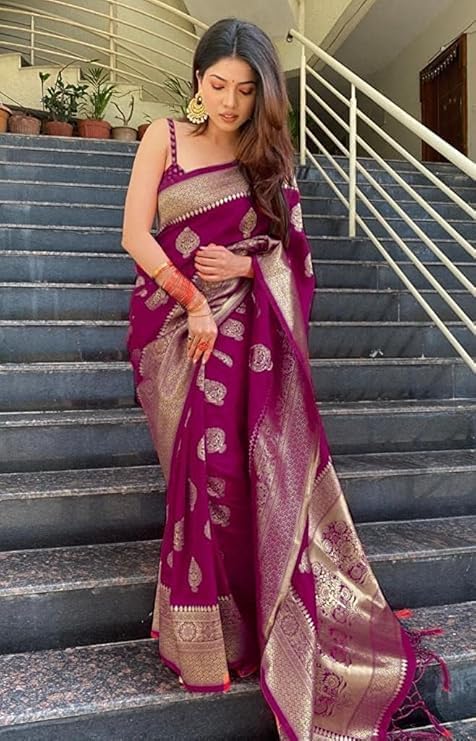
1. Look for the Silk Mark label
The Silk Mark is a holographic tag issued under the Silk Mark Organisation of India (set up by the Central Silk Board). It certifies that the fabric is natural silk, not synthetic. It’s a strong sign of authenticity, but a missing tag doesn’t prove a fake. Some small independent weavers sell without it. Check the Handloom Mark too, which shows the saree was handwoven.
Check Out – Silk Saree Blouse Designs
2. Check the korvai joint on the reverse
Turn the saree over and look at where the border meets the body. In a genuine korvai weave you’ll see a slightly jagged, interlocked zig-zag line where the two sections meet. If the border looks printed, stitched on, or perfectly straight, be suspicious.
3. Inspect the zari
- Real zari has a soft, warm glow and doesn’t glitter harshly.
- Imitation zari is very bright, almost mirror-like, and can look flat or plasticky.
- Scratch check: gently scratch a loose zari end near the pallu. A red silk core is a good sign. A white or plastic-looking core points to imitation.
- Old, genuine zari darkens slowly. It doesn’t peel or flake.
4. Feel the weight and drape
A genuine Kanjivaram is noticeably heavy because of the plied silk and metallic zari. Heavily woven bridal pieces often weigh close to a kilogram or more, though a lighter Kanjivaram with minimal zari can still be genuine. A very light saree sold as a “heavy bridal Kanjivaram” is a red flag. Pure silk also falls in firm, structured folds, not limp ones.
5. Rub it between your palms
Rub a corner of the fabric quickly between your palms. Pure silk warms up fast. Polyester and viscose stay cool and feel slippery or oily.
6. Listen for the “scroop”
Bunch the fabric in your fist. Natural silk makes a soft crunching sound called scroop. Synthetics are usually silent.
7. Check the pallu and motifs
Traditional motifs include temple borders, mayil chakram (peacock), rudraksha, checks, and animal and floral designs. They should be woven in and look equally neat on the reverse, with only small floats of thread. Printed or heat-transferred designs are a clear sign of an imitation.
8. Look at the colour
Kanjivaram colours are deep and saturated, with strong contrast between body, border and pallu. Dull, overly bright or uneven colour can mean cheaper yarn or poor dyeing.
9. Do a careful burn test (only on a loose thread)
Never burn the saree. Ask the seller to let you test a loose thread, or use a pulled-out thread at home.
| Result | Pure silk | Synthetic or blend |
|---|---|---|
| Burning | Burns slowly, self-extinguishes | Melts and drips |
| Smell | Burnt hair or feathers | Chemical or plastic |
| Ash | Soft, crumbly, powdery | Hard, sticky bead |
Treat this as a hint, not proof. Blends and the metallic parts of zari can give mixed results.
10. Sanity-check the price
Pure mulberry silk, real zari and weeks of skilled labour set a minimum cost that can’t be avoided. A genuine Kanjivaram with real zari won’t normally sell for a few thousand rupees. A very low price on a “pure bridal Kanjivaram” almost always means a blend or a power-loom piece. Price alone doesn’t prove quality, but a price far below market is a reason to walk away.
Real vs Fake Kanjivaram Saree: Quick Comparison
| Feature | Pure Kanjivaram | Fake / Imitation |
|---|---|---|
| Silk | Plied mulberry silk | Polyester, viscose or art silk |
| Zari | Silver-gold or good tested zari, soft glow | Harsh, mirror-like shine |
| Border joint | Interlocked korvai zig-zag | Straight, printed or stitched |
| Weight | Substantial | Light, flimsy |
| Touch | Warms quickly, soft with crisp body | Cool, slippery |
| Sound | Soft scroop | Silent |
| Reverse side | Neat, with short floats | Messy or printed |
| Certification | Silk Mark, Handloom Mark, GI tag | None, or vague “silk” claims |
| Price | Reflects materials and labour | Suspiciously low |
Know the Zari Types Before You Buy
Sellers use these terms differently, so ask which one applies to the saree you’re considering:
- Pure zari: silver thread with a gold finish. It’s the most valuable and the most durable.
- Tested zari: a copper-based thread with a silver or gold finish, usually tested for a minimum silver content. It looks good and costs less, but it isn’t pure.
- Imitation zari: plastic-coated metallic polyester. It tarnishes and peels, and it can’t be re-sold or recycled.
Pure zari sarees can sometimes be re-sold or melted for their metal. This is one reason heavy zari pieces keep their value.
How to Check a Kanjivaram Saree When Buying Online
You can’t touch the fabric through a screen, so check these things instead:
- Product page details. Look for “100% pure silk,” “handloom,” the zari type, and the saree’s weight in grams.
- Photos of the reverse side. A trustworthy seller shows the korvai joint and the back of the pallu.
- Close-up videos. These show zari and weave detail that photos hide.
- Certification. Ask for the Silk Mark tag and a purity or zari certificate.
- Reviews with real photos. Look for customer images, not just star ratings.
- A clear return and exchange policy. Sellers confident in their silk have no reason to hide this.
- Direct weaver relationships. Brands that source from weaving clusters can explain the saree’s origin.
Common Mistakes to Avoid
- Trusting the shine. Shiny doesn’t mean silk. Real silk has a soft sheen, not a glare.
- Assuming “silk” means “pure silk.” “Art silk” is a polyester-based fabric.
- Trusting one test. Use several tests together, because each can mislead on its own.
- Skipping the invoice. Always get a bill that states the fabric and zari type.
- Buying only on discount. Large unexplained discounts on heavy silk sarees deserve questions.
Quick Checklist: Is It Pure Kanjivaram?
- Silk Mark and Handloom Mark present
- Zig-zag korvai joint on the reverse
- Soft, warm zari with a red core
- Noticeable weight and structured drape
- Warms when rubbed, with a soft scroop
- Woven, not printed, motifs
- Zari type stated on the bill
- Price consistent with materials and labour
- Clear return policy
How to Keep Your Kanjivaram Looking New
A pure silk saree lasts for decades if you care for it:
- Dry-clean it, especially the first few times.
- Store it in a soft muslin or cotton cloth, not plastic.
- Refold it every few months so creases don’t set and damage the zari.
- Keep it away from perfume, sweat and direct sunlight.
- Air it in shade, away from moisture.
Frequently Asked Questions
How can I identify a pure Kanjivaram silk saree at home?
Rub the fabric between your palms (it should warm up), listen for the scroop, check the reverse side for the korvai zig-zag joint, and look at the zari core. A burn test on a loose thread adds another clue.
What is the difference between Kanjivaram and Kanchipuram silk?
Nothing. “Kanjivaram” is the popular spelling and “Kanchipuram” is the town’s name. Both refer to the same saree.
Does a pure Kanjivaram always have the Silk Mark?
Not always. The tag is a strong sign of authenticity, but some small weavers sell without it. Combine it with the other checks.
How do I tell real zari from fake zari?
Real zari has a soft, warm sheen and a silk core, often red, under the metal. Fake zari glitters harshly and tarnishes or peels over time.
Why are Kanjivaram sarees so expensive?
They use plied mulberry silk, silver-gold zari, and days or weeks of skilled handloom labour for every saree.
How much does a pure Kanjivaram saree weigh?
Weight varies with the design. Heavy bridal sarees often weigh close to a kilogram or more. Lighter designs weigh less but still feel substantial.
Is the burn test safe and reliable?
Only do it on a loose thread, away from flammable items. It works as a quick hint, but it can’t confirm purity on its own, especially on blends.
Can a pure Kanjivaram be machine-woven?
Power-loom versions exist, but a traditional Kanjivaram is handloom woven. Check the weave on the reverse, the korvai joint, and the Handloom Mark.
Where should I buy an authentic Kanjivaram saree?
Buy from a trusted retailer or directly from weaving clusters. Look for certification, transparent zari details and a fair return policy.
Final Thoughts
You don’t need to be a weaver to spot a genuine Kanjivaram. Check the Silk Mark, the korvai joint, the zari, the weight and the feel, and make sure the price fits the materials. Ask questions and keep the bill. A pure Kanjivaram is a lasting investment, and a seller who has nothing to hide will welcome your checks.
Looking for a certified pure Kanjivaram? Browse our authentic Kanchipuram silk sarees → (link to your collection page)
